


Key numbers
- Stone tons = ft² ÷ 9 × spread rate (lb/yd²) ÷ 2,000
- Binder gallons = ft² ÷ 9 × binder rate (gal/yd²)
- Caltrans rates: 3/8–1/2 in chips at 25–35 lb/yd² with 0.35–0.50 gal/yd² of polymer-modified asphalt
- Calculator setting: depth (in) = spread rate ÷ 75, so 0.40 in ≈ 30 lb/yd²
- Service life: 5 to 10 years per treatment (Caltrans MTAG)
On this page
- How to use the Chip Seal Driveway Cost
- How much does a chip seal driveway cost?
- How do I use the calculator for chip seal stone?
- How much stone and binder for common driveway sizes?
- What application rates do agencies use?
- What drives the price of a chip seal driveway?
- How does chip seal compare with asphalt and gravel?
- How long does chip seal last and how soon can you use it?
- How is the work checked?
- Common mistakes when pricing a chip seal driveway
- Frequently asked questions
How to use the Chip Seal Driveway Cost
- 1Describe the areaChoose Rectangle (length × width), Circle (diameter) or Known area if you already have the square footage.
- 2Pick your unitsUse US (feet and inches) or Metric (meters and centimeters). Switching converts the numbers you typed, so the area stays the same.
- 3Enter the depthType how deep the crushed stone (#57) should be, 0.4 in is a common starting point for this job.
- 4Choose the materialThe calculator uses 1.35 tons per cubic yard for crushed stone (#57). Use your supplier's figure if it differs.
- 5Allow for settlingChoose the extra: none, 5%, 10% (the default) or 20% for a base you will compact.
- 6Read and price the resultsSee cubic yards, cubic feet, cubic meters, US tons and metric tonnes. Enter your supplier's price per ton for the total cost.
Results update as you type. Back to the calculator ↑
How much does a chip seal driveway cost?
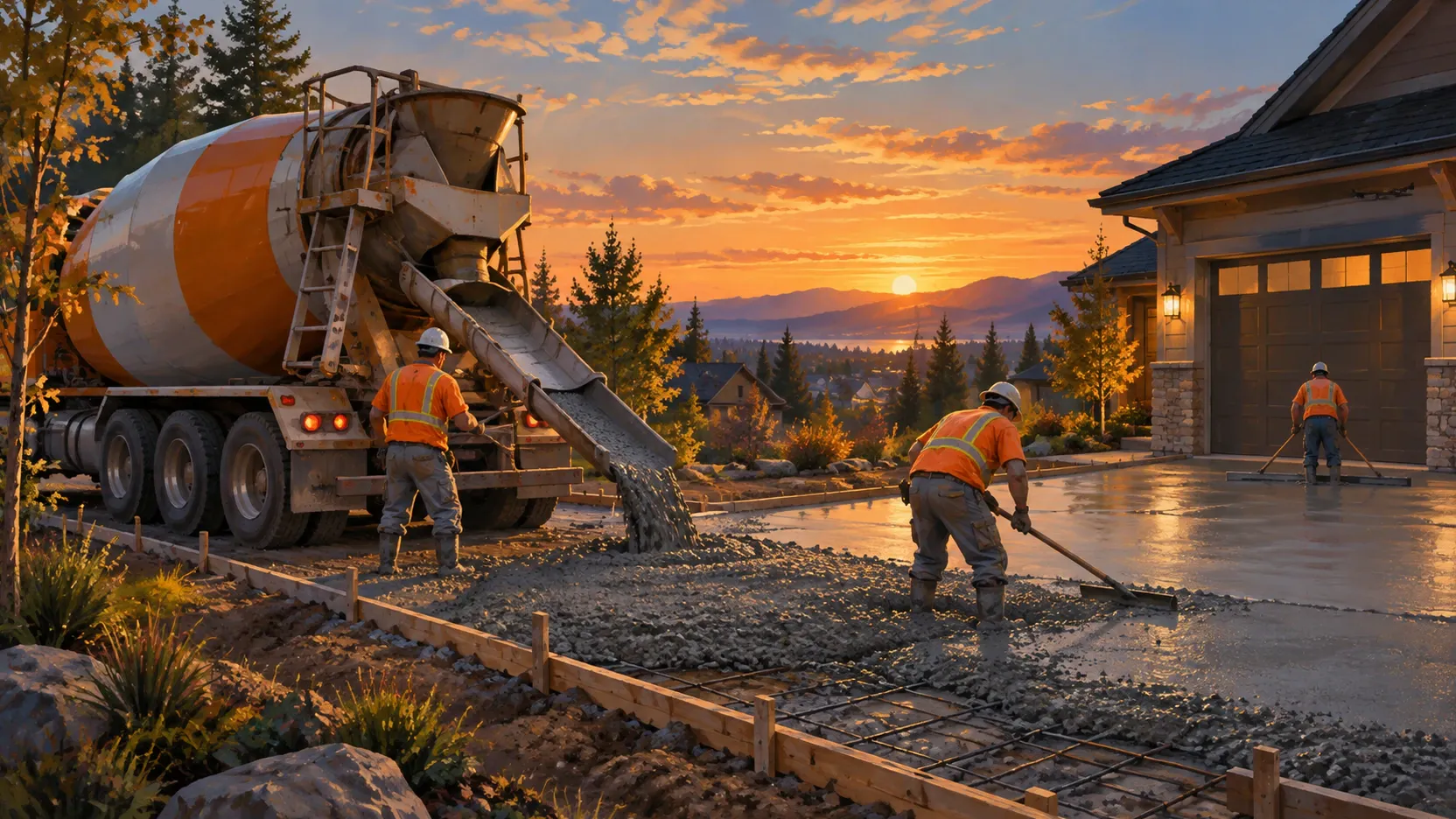
A chip seal (also called tar and chip, or oil and chip) is a thin coat of liquid asphalt binder sprayed on the surface, covered at once with a single layer of stone chips and rolled to press the chips in. Its cost is four lines on a quote: the stone, the binder, any base work, and the crew and equipment. We do not print a national price per square foot, because stone, binder and mobilization are set locally. This page turns your quote into those lines so you can check and compare them.
Chip seal cost = stone tons × price per ton + binder gallons × price per gallon + base work + mobilization and labor
Both material quantities come from the area in square yards (ft² ÷ 9) and two application rates that the contractor designs:
Stone tons = yd² × spread rate (lb/yd²) ÷ 2,000 · Binder gallons = yd² × binder rate (gal/yd²)
Worked example: 12 × 60 ft driveway, single chip seal
- Area: 12 × 60 = 720 ft² = 80 yd² (66.89 m²)
- Stone at 30 lb/yd²: 80 × 30 ÷ 2,000 = 1.2 tons; with 10% extra, 1.32 tons
- Binder at 0.40 gal/yd²: 80 × 0.40 = 32 gallons
- Cost sensitivity: every $10 per ton of stone adds $13.20; every $1 per gallon of binder adds $32. Base, mobilization and labor come from the quote.
How do I use the calculator for chip seal stone?
Enter the driveway size and set the depth to the spread rate ÷ 75. The calculator works by volume and loose density, so a thin “depth” stands in for a spread rate: at the 1.35 t/yd³ planning density it uses for crushed stone (2,700 lb/yd³), one square yard at 1/75 in deep holds 1 lb of stone. The default 0.40 in therefore equals 30 lb/yd².
| Spread rate (lb/yd²) | Spread rate (kg/m²) | Calculator depth (in) | Typical use (Caltrans MTAG) |
|---|---|---|---|
| 18 | 9.8 | 0.24 | Low end for 1/4 in chips with emulsion |
| 25 | 13.6 | 0.33 | Low end for 3/8–1/2 in chips |
| 30 | 16.3 | 0.40 | Middle of the 25–35 lb/yd² range |
| 35 | 19.0 | 0.47 | High end for 1/2 in chips |
| 40 | 21.7 | 0.53 | Asphalt-rubber seals (35–40 lb/yd²) |
The tons from this route match the direct formula exactly (720 ft² at 0.40 in gives 1.2 tons, the same as 80 yd² × 30 lb ÷ 2,000), and the density cancels out. What matters is the spread rate your contractor uses, not the density. Leave the extra at 10% unless the contractor tells you otherwise; set the price to their price per ton of chips. Metric conversions use NIST factors (1 yd² = 0.8361 m², 1 lb = 0.4536 kg).
How much stone and binder for common driveway sizes?
Multiply the square yards by the two rates. The table uses Caltrans’ 25–35 lb/yd² chip range for 3/8–1/2 in chips, with tons shown before and after 10% extra, and binder at rates from 0.25 to 0.60 gal/yd².
| Driveway (ft) | Area (ft²) | Area (yd²) | Area (m²) | Stone at 25 / 30 / 35 lb/yd² (tons) | Same +10% (tons) | Binder at 0.25 / 0.40 / 0.60 gal/yd² |
|---|---|---|---|---|---|---|
| 10 × 50 | 500 | 55.56 | 46.45 | 0.69 / 0.83 / 0.97 | 0.76 / 0.92 / 1.07 | 13.9 / 22.2 / 33.3 gal |
| 20 × 24 | 480 | 53.33 | 44.59 | 0.67 / 0.80 / 0.93 | 0.73 / 0.88 / 1.03 | 13.3 / 21.3 / 32.0 gal |
| 12 × 60 | 720 | 80.00 | 66.89 | 1.00 / 1.20 / 1.40 | 1.10 / 1.32 / 1.54 | 20.0 / 32.0 / 48.0 gal |
| 12 × 100 | 1,200 | 133.33 | 111.48 | 1.67 / 2.00 / 2.33 | 1.83 / 2.20 / 2.57 | 33.3 / 53.3 / 80.0 gal |
| 12 × 300 | 3,600 | 400.00 | 334.45 | 5.00 / 6.00 / 7.00 | 5.50 / 6.60 / 7.70 | 100 / 160 / 240 gal |
Figures come from scripts/chip-seal-driveway-cost.ts. In metric, gal/yd² × 4.527 = L/m², so 0.25, 0.40 and 0.60 gal/yd² are 1.13, 1.81 and 2.72 L/m². A 4 × 20 m drive (80 m²) at 16 kg/m² takes 1.28 tonnes of chips, or 1.41 t with 10% extra.
What application rates do agencies use?
Rates depend on the binder and the chip size, so they are designed per job. Caltrans’ Maintenance Technical Advisory Guide (MTAG, Chapter 7) gives these planning ranges for its seal types:
| Seal type | Binder rate (gal/yd²) | Binder rate (L/m²) | Chip size | Chip rate (lb/yd²) | Chip rate (kg/m²) |
|---|---|---|---|---|---|
| Polymer-modified asphalt (hot) | 0.35–0.50 | 1.58–2.26 | 3/8–1/2 in | 25–35 | 13.6–19.0 |
| Polymer-modified emulsion with rejuvenator | 0.25–0.40 | 1.13–1.81 | 1/4–1/2 in | 18–35 | 9.8–19.0 |
| Asphalt rubber (hot) | about 0.60 | 2.72 | pre-coated chips | 35–40 | 19.0–21.7 |
The same guide gives the design rules that keep the rates honest: a single layer of chips, no more than 10% excess chips, and about 70% embedment of the chip in the binder. FHWA’s chip seal checklist adds that more binder goes on dry, porous surfaces and low-traffic roads, and less on smooth, asphalt-rich surfaces and high-traffic roads. If chips sink more than 80% the binder rate is too high; under 50% it is too low.
What drives the price of a chip seal driveway?
Material is a small share on a driveway; the base, the crew and getting the equipment to you usually decide the quote. Ask for each line separately.
- Stone price per ton. Clean, single-size chips (Caltrans: one size between 0.25 and 0.6 in, cubical, flat and elongated pieces limited to 25–30%, fines 1–2%). Ask the quarry or contractor which chip they price, since that spec is narrower than ordinary driveway gravel.
- Binder type and price per gallon. Emulsions, hot polymer-modified asphalt and asphalt rubber are applied at different rates (table above), so compare total gallons × price, not just the unit price.
- Base work. A chip seal adds no strength. Caltrans does not recommend it over structurally deficient pavement, cracks wider than 1/4 in unless sealed, many potholes, or ruts deeper than 1/2 in. On a gravel drive, the stone base must be graded and compacted first; that can cost more than the seal.
- Single or double seal. A double seal is two binder-and-chip passes, roughly doubling material and labor.
- Mobilization. A proper chip seal uses a binder distributor, a chip spreader, haul trucks, a pneumatic-tired roller and a broom (FHWA checklist). Moving that fleet for one driveway is a fixed cost, which is why per-ft² prices fall on long drives or when neighbors book together.
- Weather window. Agencies set seasonal dates and minimum air and surface temperatures; jobs in marginal weather can be rescheduled.
Turn a lump-sum quote into per-yard figures
Ask the contractor for the area, the chip rate (lb/yd²) and the binder rate (gal/yd²) they plan to use. Multiply them out with the table above. If two quotes differ a lot, the gap is usually base work, a lighter chip rate or a different binder, not the stone price.
How does chip seal compare with asphalt and gravel?
Chip seal sits between a gravel drive and a hot-mix asphalt drive: a sealed, stone-textured surface with far less material than paving. For the same 12 × 60 ft drive, with 10% extra:
| Surface on 12 × 60 ft (720 ft², 66.89 m²) | Main material | Quantity |
|---|---|---|
| Single chip seal, 30 lb/yd² + 0.40 gal/yd² | Chips + binder | 1.32 tons + 32 gal |
| Double chip seal, 30 + 20 lb/yd², 0.40 + 0.30 gal/yd² (illustrative) | Chips + binder | 2.2 tons + 56 gal |
| Hot-mix asphalt, 3 in compacted at 145 lb/ft³ | Hot mix | 14.36 tons |
| Crusher run base or gravel surface, 4 in (1.6 t/yd³ planning value) | Crusher run | 15.64 tons |
The asphalt tonnage is from our asphalt driveway cost page and the gravel figure from the crusher run calculator method. Note the last row: a 4 in gravel layer, if your base needs it, weighs more than ten times the chips. For a gravel surface priced on its own, use the gravel driveway cost calculator.
How long does chip seal last and how soon can you use it?
Caltrans gives a typical treatment life of 5 to 10 years, depending on climate, the condition of the surface below, traffic and seal type. Its guide also gives opening times: about 2 hours for emulsion seals, and 3 to 6 hours for hot binders, depending on temperature and humidity.
FHWA’s checklist adds the practical rules for the first days: lead traffic over fresh seals at 40 km/h (24 mph) or less, broom loose chips once the bond has formed without dislodging embedded ones, and remove swept chips. On a driveway that means slow speeds, no sharp turns on fresh chips, and expecting some loose stone to be swept in the first weeks.
How is the work checked?
You can check the two rates the same way inspectors do. FHWA’s checklist weighs a 1 yd² (0.84 m²) pan or tarp before and after the distributor or spreader passes over it; the difference is the binder or chip rate per square yard. For random checks, it divides the gallons used, or the tons from a weighed truck, by the area covered (length × width ÷ 9 for yd²).
For a homeowner, the simple version is the delivery tickets: tons of chips and gallons of binder divided by your square yards should land near the rates on the quote. A finished seal should show a uniform “salt and pepper” look, chips one stone deep, and no binder on top of the chips.
Common mistakes when pricing a chip seal driveway
- Comparing price per square foot without the rates. A quote with a lighter chip or binder rate looks cheaper and may not hold chips. Ask for lb/yd² and gal/yd².
- Skipping the base. Chip seal waterproofs and adds texture; it does not fix soft spots, ruts or potholes. Price base repair as its own line.
- Using gravel density as the spread rate. Chip seal is bought by spread rate. Use the depth ÷ 75 setting above, or the direct formula.
- Ordering exact tons. Some chips are lost to brooming and edges; 10% extra is a common planning margin, but follow the contractor.
- Forgetting the turning area. Measure aprons and turnarounds; they add square yards and wear fastest under turning tires.
For other driveway surfaces and materials, start on the concrete calculator home page, or compare with the concrete driveway cost page.
FAQ
Frequently asked questions
How much stone do I need to chip seal a 12 × 60 driveway?
About 1.2 tons at 30 lb per square yard, or 1.32 tons with 10% extra. The drive is 720 ft² (80 yd²). At Caltrans' 25–35 lb/yd² range for 3/8–1/2 in chips, it is 1.0 to 1.4 tons before extra.
How do you calculate chip seal cost per square foot?
Add stone and binder per square yard, then divide by 9. At 30 lb/yd² plus 10% extra, each $10 per ton of stone adds about $0.018 per ft²; at 0.40 gal/yd², each $1 per gallon of binder adds $0.044 per ft². Add base and mobilization from your quote.
How many gallons of binder does a chip seal driveway take?
Square yards × the binder rate. A 12 × 60 ft drive (80 yd²) takes 20 gallons at 0.25 gal/yd², 32 at 0.40 and 48 at 0.60. The rate depends on binder type and chip size, so use your contractor's design rate.
Is chip seal cheaper than asphalt for a driveway?
It uses far less material. A 12 × 60 ft drive needs about 1.3 tons of chips for a single seal versus 14.36 tons of hot-mix asphalt at 3 in compacted, both with 10% extra. Compare written local quotes, which include base and crew costs.
How long does a chip seal driveway last?
Caltrans' maintenance guide gives a typical treatment life of 5 to 10 years for chip seals on roads, depending on climate, existing pavement condition, traffic and the type of chip seal. A driveway sees less traffic, but the same factors apply.
What size stone is used for chip seal?
One-size chips between about 1/4 and 1/2 in. Caltrans lists 3/8 to 1/2 in chips for polymer-modified asphalt seals and 1/4 to 1/2 in for polymer-modified emulsion seals, and says chips should be clean, cubical and single-sized, with fines limited to 1–2%.
How soon can you drive on a new chip seal?
Caltrans gives about 2 hours for an emulsion seal and 3 to 6 hours for a hot binder, depending on weather. FHWA's checklist has a pilot car lead traffic over fresh seals at 40 km/h (24 mph) or less. Drive slowly and avoid sharp turns for the first days.
How much does a double chip seal driveway need?
Roughly the materials of two seals. On a 12 × 60 ft drive, an illustrative 30 + 20 lb/yd² of chips is 2.0 tons (2.2 with 10% extra), and 0.40 + 0.30 gal/yd² of binder is 56 gallons. Use the rates your contractor designs.
4 Sources
- Caltrans Maintenance Technical Advisory Guide (MTAG), Chapter 7 Chip Seals: treatment life 5–10 years; binder and chip rates by binder type; aggregate 0.25–0.6 in single size; 70% embedment; no more than 10% excess chips; opening to traffic
- FHWA / Foundation for Pavement Preservation, Pavement Preservation Checklist Series 2: Chip Seal Application Checklist (checking rates in lb/yd² and gal/yd²; embedment 50–80%; pilot car at 40 km/h (24 mph) or less over fresh seals; brooming)
- Pennsylvania Asphalt Pavement Association, Constructing Quality Asphalt Pavements Check List, 2025 (hosted by Penn State): hot-mix density used for the asphalt comparison
- NIST SP 811, Appendix B.9: conversion factors for area, volume and mass
Last reviewed October 10, 2026 by M Bilal. Found an error? Tell us.